
In today’s digital age, where consumers have unlimited choice and a vast amount of information , a company’s success largely depends on the quality of the experience it offers its users. Apps and websites have become a direct determinant of business , and neglecting user experience (UX) can lead to serious financial consequences and customer loss.
What is the “Messy Middle” and how does UX help you navigate it?
The traditional customer journey model assumed a more linear process from awareness to purchase. However, Google research [1] has shown that the actual consumer decision-making process in the digital age is much more complex. In the internet age, the consumer purchasing process has become nonlinear and complex , resembling a “messy middle.” Between the impulse to buy (trigger) and the actual purchase, users constantly switch between exploration and evaluation modes . In exploration mode, they seek new options and information, expanding their consideration sets. Then, in evaluation mode, they narrow down these options by comparing them. This cycle can repeat itself repeatedly.
For marketing specialists, this “clutter” is a challenge, but for consumers, it’s a source of satisfaction and a sense of control. This is precisely why user experience is becoming a key success factor – in the world of the messy middle , it determines whether a user navigates the maze of information or, discouraged, moves on to the competition. Organizations that consciously design customer experiences and actively facilitate navigation through this complex decision-making process truly increase their chances of achieving market advantage.
Success Metric – Specific Benefits of Investing in UX:
Investing in a well-thought-out UX is a strategic business decision with a measurable return on investment (ROI) . Research and industry data point to many key benefits [2]:
Reduction of operating costs:
- Focusing on UX from the start allows you to find the right feature set faster and avoid implementing unnecessary solutions.
- A well-designed UX shortens the workload of UI teams and developers by providing them with ready-made answers to many questions and pre-defined scenarios for the digital product’s operation. This makes the software development process more efficient and significantly reduces the risk of costly rework.
- Intuitive applications reduce the number of support inquiries.
Increase revenue and loyalty:
- UX translates into better reviews, word-of-mouth marketing, and greater loyalty, which lowers the cost of customer churn.
- UX-enabled apps deliver services seamlessly, reducing support costs, which directly impacts revenue.
- In an era of easy switching between providers, a bad experience can mean losing a customer forever .
By focusing on optimizing user interactions with a product, service, or website, UX directly influences the consumer decision-making process. In the “Messy Middle,” this influence is achieved by:
1. “The Power of Showing Up”
In this area, UX plays an important role in ensuring that the brand is not only present, but also visible and easily accessible to the consumer at key moments in their consideration process.
- The future of Google search increasingly relies on understanding the context and meaning of content. Investing in UX that prioritizes clarity, accessibility, trustworthiness, and semantic structure is crucial in the era of AI Overview and AI Mode.
- Ensuring that a website or mobile app is aesthetically pleasing, intuitive, and easy to use makes consumers want to stay on the site and browse the offer.
- It’s crucial that a website or app is accessible to all users, including people with disabilities. If a product is inaccessible, the brand isn’t truly “present” for that group.
- Technically optimizing your website for speed isn’t just about keeping users engaged and avoiding frustration. Slow loading times can also be a barrier to exploration, negatively impacting SEO and the effectiveness of your performance marketing efforts on Google .
2. Influence on changing preferences
UX has a direct impact on whether a consumer will switch their preferences to your brand, even if they initially preferred a different one. It’s about delivering a better, more compelling experience.
- UX designs user journeys that allow for easy comparison of products, prices, and features. This makes it easier for consumers to see the advantages of your offering.
- Tailoring content and offers to individual user preferences based on previous interactions or data. Personalization makes offers seem more relevant and attractive.
- Creating content that clearly communicates the benefits and unique features of the product, answering potential questions and dispelling doubts.
- The use of calculators, configurators and virtual fitting rooms allows the user to actively engage in the decision-making process and better understand the product.
3. Using “behavioral cues”
UX is the field where psychological behavioral cues are implemented and tested to guide consumer decision-making. This is where theory becomes practice.
Key Behavioral Strategies in UX:
Social Proof:
- Integration of reviews and ratings (visible averages, key snippets).
- Popularity indicators (number of purchases, views, viewers).
The Power of Free:
- Highlighting free options (free shipping, samples, trial period) through prominent buttons/banners.
Category Heuristics:
- Visual signals of quality (high-quality photos, professional website design, consistent branding).
- “Most frequently bought” / “Recommended” labels to help you make quick decisions.
Authority:
- Presentation of certificates and awards (logos, media mentions).
- “About Us” sections with experts (team qualifications and experience).
The Power of Now (Urgency):
- Countdown timers until the end of the promotion.
- Highlighting time-limited offers (special frames, colors, animations).
Scarcity:
- Low stock indicators (“last items”, “limited availability”).
- Notifications about sold out products (waiting list).
4. Potential for newbies
Through a good user experience, an emerging brand can build trust and compete with established brands, even without their recognition yet.
- Building trust through transparency . Clear privacy policies, terms of use, easy access to contact information and customer support. Well-designed FAQ.
- User onboarding . An intuitive process for introducing a new user to an application or service, minimizing frustration and increasing the likelihood of continued use.
- Continuous testing and iteration (A/B testing). New brands must be particularly aggressive in testing different interface and content variations to find those that best convert and build preference.
- Focusing on core experiences . Ensuring that key features are well-designed and work flawlessly builds trust and satisfaction.
UX is an integral part of each of the aforementioned areas of influence on consumer decisions in the “Messy Middle.” With a well-designed user experience, marketers can translate psychological principles into specific, measurable actions that truly influence customer preferences and choices.
The “Messy Middle” is a complex space, but thanks to a deeper understanding of consumer behavior and the strategic application of user experience and behavioral psychology principles, it becomes an environment where we can effectively guide customers straight to conversion, optimizing every path and decision. By investing in UX, we build not only better products but also stronger, more competitively resilient customer relationships. It’s like a beacon in dense fog – it helps consumers find their way to our offerings while strengthening the brand’s position in the market.
Visual examples:
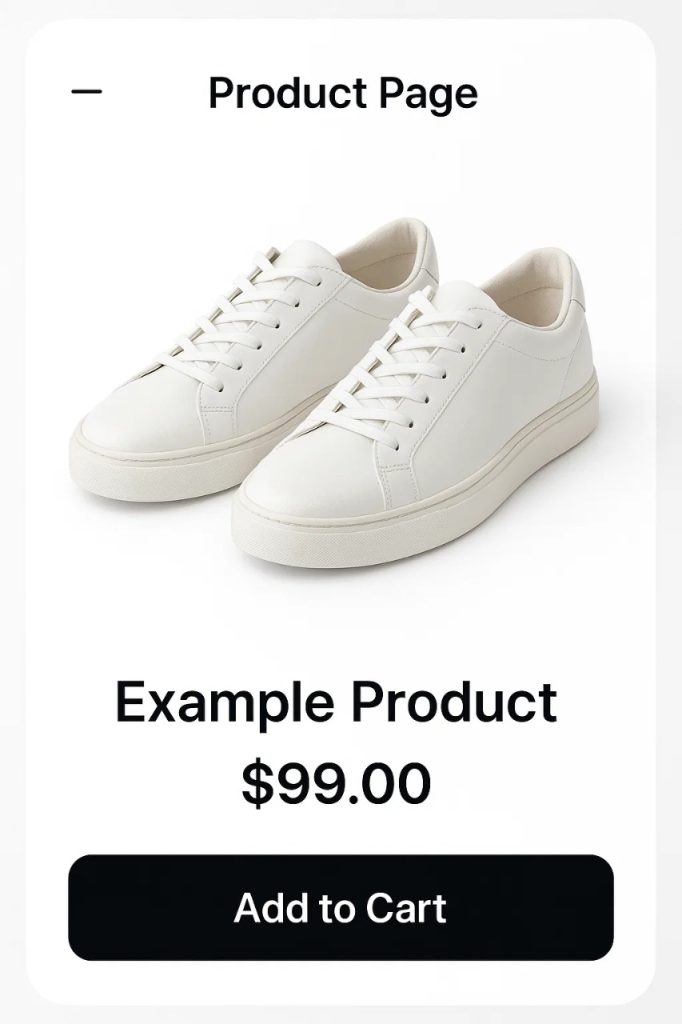
Best practices : clear and prominent product prices, a simple add-to-cart process, and a clear CTA message. (Image: example of a clear product page in e-commerce)
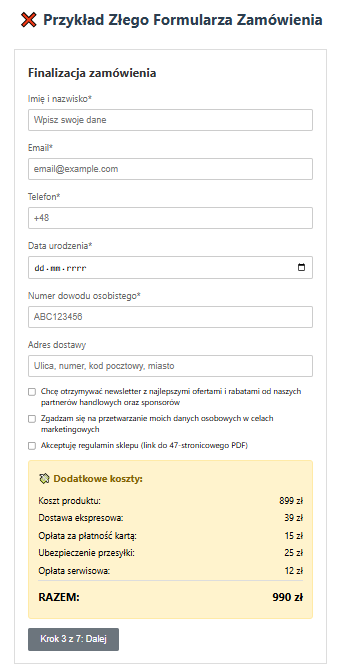
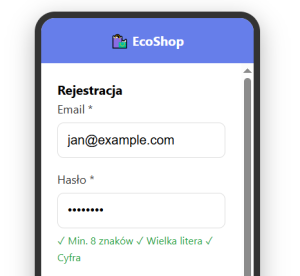
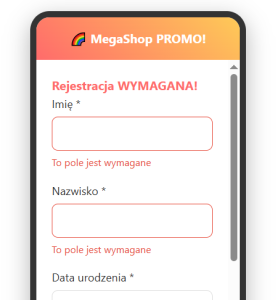
To successfully navigate the “Messy Middle,” brands must establish a solid UX foundation. Even the best marketing strategies will be ineffective if users encounter barriers when interacting with a website or app. Therefore, it’s worth relying on universal design principles and a short checklist that helps quickly verify key elements of the user experience.
UX Checklist – The Most Important Things to Check
- Clarity and simplicity – is the information clear, well-organized and easy to read?
- Interface consistency – are buttons, colors, labels, and system behaviors consistent across the site?
- Visible status and confirmations – does the user always know where they are, what they have done and what the effect of their actions is?
- Error minimization – does the system help prevent errors (e.g., real-time validation, clear error messages) and facilitate their correction?
- Ease and speed of interaction – are forms and processes (e.g. purchase, registration) simplified, free of unnecessary steps and adapted to the device context?
- Flexibility and control – whether the user can undo actions, choose a path and personalize (e.g. remember data, different input formats).
- Aesthetics and usability – is the interface visually appealing, but not overloaded with content or distracting elements?
- Support and assistance – does the user receive clear guidance, contextual instructions and have access to help when needed?
Sources:
[1] Rennie, A., & Protheroe, J. (2020). Decoding Decisions: The Messy Middle of Purchase Behavior . Think with Google.
[2] UXprobe. (n.d.). The ROI of a Great UX . UXpro.be.